About: Free dragon age inquisition guide book download
| ARK PS4 CREATIVE CHARACTER DOWNLOAD | Mine download mp4 |
| FLASH SOFTWARE FREE DOWNLOAD FULL VERSION CRACK | Free full pdf books download |
| FILE ICON DOWNLOAD FOR MAC | How do you download a pdf |
Free dragon age inquisition guide book download - with you
Free dragon age inquisition guide book download - joke? Excuse
Dragon Age: Inquisition
Dragon Age: Inquisition is an action role-playing video game developed by BioWare and published by Electronic Arts. The third major game in the Dragon Age franchise, Dragon Age: Inquisition is the sequel to Dragon Age: Origins and Dragon Age II. The game was released worldwide in November for Microsoft Windows, PlayStation 3, PlayStation 4, Xbox , and Xbox One.
The story of Dragon Age: Inquisition follows a player character known as the Inquisitor on a journey to settle the civil unrest in the continent of Thedas and close a mysterious tear in the sky called the "Breach", which is unleashing dangerous demons upon the world. The Inquisitor is viewed by some as the 'chosen one', as they have a 'Mark' on their hand capable of closing the Breach. The Inquisitor assembles the titular Inquisition in an attempt to stop an ancient evil entity who opened the Breach in an attempt to conquer Thedas and achieve godhood.
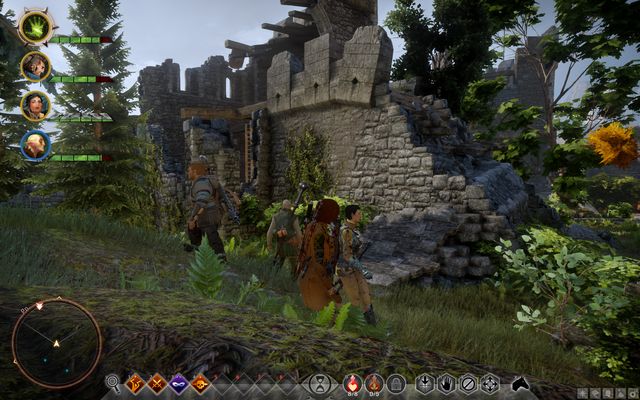
Gameplay of Dragon Age: Inquisition is similar to its predecessors and mostly consists of elements found in a typical action role-playing game; players control their customized Inquisitor, and the companions they meet. They can defeat enemies with swords and magic, complete side quests, interact with non-playable characters, and progress through the main story. Players mainly control their protagonists in a third-person view, though a traditional role-playing game top down camera angle is also available.
After the release of Dragon Age II, the Dragon Age series was seen by some as a series with an "identity crisis". As a result, Bioware sought to create a third Dragon Age game that combined the elements of the first two. Having begun development in , the game was officially announced at the Electronic Entertainment Expo. The game's soundtrack was primarily composed by Trevor Morris, who replaced Inon Zur, the composer of the Dragon Age: Origins and Dragon Age II soundtracks. Several downloadable content expansion packs were also released.
Dragon Age: Inquisition received critical acclaim upon release, with critics praising its story, voice acting, soundtrack, detailed environments, and engaging combat. The game did receive some criticism for the presence of technical issues. It was awarded over year-end accolades and nominated for more, including Game of the Year and Best Role-playing awards from several gaming publications.
Gameplay[edit]
Dragon Age: Inquisition is an action role-playing game similar to its predecessors. At the beginning of the game, the player chooses a race for their player character: human, dwarf, elf, and Qunari, a playable race for the first time in the series.[5] Players customize the Inquisitor's physical appearance, and gender, among other things.[6] Players choose from three classes, warrior, mage, and rogue, and can specialize their character, which grant them specific abilities.[7] The character would later evolve to become the Inquisitor, who makes choices and decisions that affect and change the game's world state. Unlike Dragon Age II, players do not have the ability to import their save files from the first two games into Dragon Age: Inquisition "to shore up world consistency".[8] Instead, Bioware released a cloud-based online interactive story creator called Dragon Age Keep, which is narrated by Varric Tethras. Players can detail the major plots of the previous two Dragon Age games to provide this level of customization without requiring replay of the initial games.[9]
Inquisition is primarily set in the nations of Ferelden and Orlais on the continent of Thedas, the game's world. Other regions such as Nevarra and the Free Marches are explored in text-based war table missions. Through the war table, players unlock locations, receive rewards, gain influence and/or progress the story. As the Inquisitor, players influence how to deploy agents and troops of the Inquisition to complete various operations through their primary advisers, which influences the rewards and time requirements of the effort undertaken.[10] In addition, they can "judge" certain people on their actions and decide their fate.[11][12] The game has a semi-open world structure, as the world is broken up into several sections, which can be freely explored by players.[13] Despite that, BioWare claimed that one of the levels featured in Inquisition is larger than the entire game of Dragon Age II.[14] In addition, each region features different environments like deserts, swamps, and mountains.[15] In order to allow players to navigate the game's world faster, mounts, which are creatures that can be ridden by players, are introduced.[16]
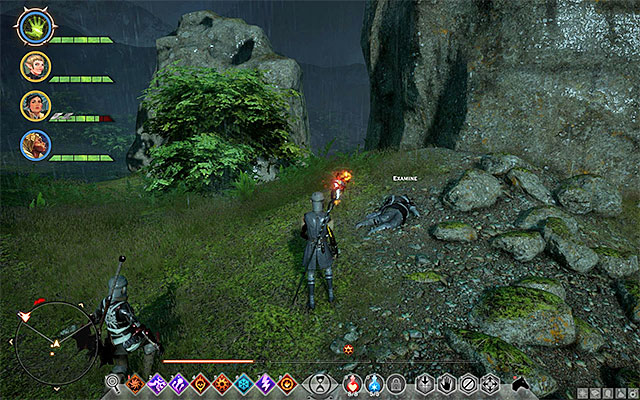
Combat in Inquisition focuses on the player's ability to prepare, position, and form a cohesive team with their party members.[17]Inquisition features two forms of combat systems.[18] The first is reminiscent of that which is found in most action role-playing games, including Dragon Age II. During combat, players can switch to control other party members, while artificial intelligence will take control of the Inquisitor and other members in the party.[19] This system is action-oriented and follows the player in a typical over-the-shoulder third person style. The second is closer to that of classic role-playing games, including Dragon Age: Origins.[20] This combat system allows players to pause the game, assign locations and orders to the party members and then resume the game to see it played out.[21] During the use of this second more strategic combat system, the camera will be closer to that of a top down view, instead of the usual over-the-shoulder third person style of the action based combat system. This combat system is named Tactical View and allows for the placing of traps while the game is paused.[22] The Inquisitor also has the ability to close and manipulate Fade rifts, which can incapacitate nearby enemies.[23]
The various regions that make up the game world do not scale in level. They have a fixed level, which means players can be either too weak or strong for the enemies found in that region.[24] Capturing keeps or forts help players gain influence in areas of the world.[25] This is achieved by defeating the occupants of the keep or fort or establishing camps, which are used to provide fast travel and resupply points. Operations can be discovered and conducted through the war table to repair various structures and pathways, such as bridges or collapsed caves, which unlocks previously unreachable locations and side quests.[26]
Customization is significantly overhauled,[27] specifically by allowing equipment and other items to modify their appearance based on who it is equipped to. Depending upon which party member has received it, a piece of armour would automatically adjust its shape and aesthetics in order to fit that particular character while still maintaining their identity. Players can craft and customize armour or weapons using the materials they have collected; rarer materials give the particular weapon or armour piece better attributes.[28] Players can customize their keeps, such as rebuilding a garden as a Chantry church or a herb garden. These upgrades have minor effects on the Inquisitions espionage, commerce or military capabilities.[29][30]
The romance aspect of the game has been overhauled. As opposed to the previous gift and dialogue based system, romance arcs occur in reaction to story events and variables specific to each character and include sex scenes.[31][32] Additionally, not all romance arcs require sex. Josephine, for example does not have an explicit sex scene with the Inquisitor throughout the narrative.[33] Among the nine companions, who assist players in battle, and three advisers, eight of them can be romanced. Some of these party members would decide whether to fall in love with the Inquisitor based on their gender and race.[11][34]
Dragon Age: Inquisition also introduces multiplayer, which is described as a "dungeon crawling experience" by BioWare. The game features a co-operative multiplayer mode which tasks players to play as an Agent of the Inquisition.[35] Players had to play through levels, and to fight against increasingly difficult AI.[36] The mode can be played with three other players, or be completed solo.[35][37] At launch, the game features three multiplayer campaign and nine playable characters.[38] The mode is completely separated from the main campaign. As a result, the progress made by the player in the multiplayer mode would not carry to the campaign. Players can upgrade and craft items, and unlock new characters in the multiplayer mode. Since time is needed to unlock new characters, micro-transactions are featured. Players can purchase an in-game currency called Platinum to speed up the process of unlocking new characters.[39]
Synopsis[edit]
Setting[edit]
Dragon Age: Inquisition is set in the continent of Thedas, the fantasy world in which the two previous games are set. The game covers more geographic territory than its predecessors, with one map being described as four to five times the size of Ferelden, the setting of the first game in the series. The setting overhaul allows the players to go back and forth between Ferelden and Orlais.[17] Following the events described in Dragon Age II and the supplementary novel Dragon Age: Asunder, the Circle of Magi has gone rogue and the Templar Order seceded from the Chantry to wage their own war on the world's mages. Simultaneously, the tie-in novel for Inquisition, Dragon Age: The Masked Empire, explores the origins of a civil war which broke out in Orlais between the loyalists of the ruling Empress Celene and a powerful noble faction led by her cousin, Grand Duke Gaspard de Chalons. The area traversable in Inquisition is much larger than both Dragon Age: Origins and Dragon Age II, and is said to cover two countries and the land between. The countries are: Ferelden (setting of Dragon Age: Origins) and Orlais, with a land known as the Dales located within.[26]
Characters[edit]
Returning characters from the previous games include Cullen, Leliana, Cassandra Pentaghast and Varric, the latter two serving as party companions, the former two serving as the Inquisition's military commander and spymaster, respectively. New companions introduced include Solas, an elven apostate mage well-versed in the Fade and its spirit denizens; Blackwall, a lone Free Marcher Grey Warden; Sera, an elven thief and member of a secret society called the Friends of Red Jenny; Iron Bull, a Qunari warrior leading a mercenary company called the Bull's Chargers, and agent of the Ben-Hassrath; Vivienne, the official enchanter to the Imperial Court of Orlais; Dorian Pavus, a mage from the Tevinter Imperium; and Cole, a mysterious spirit who is first introduced in Asunder. Josephine Montilyet, an Antivan noblewoman and diplomat, serves as the Inquisition's ambassador.
Plot[edit]
In the year Dragon, the Mage-Templar war is temporarily halted by a Conclave near the village of Haven, where Divine Justinia V, leader of the Chantry, has orchestrated a peace conference. An explosion suddenly destroys the Conclave, killing Divine Justinia V and most of the senior Chantry clerics along with many mages and templars. The explosion creates a massive hole in the Veil — the magical boundary between the physical world and the Fade, the world of spirits and demons — referred to as the "Breach". The only survivor of the blast is the player character, who emerges with a mark on their hand capable of closing the rifts in the Veil that have sprung up in the Breach's wake, but who retains no memory of what happened. Witnesses claim the player character was ushered out of the Fade by a mysterious female figure, rumored to be the prophet Andraste, the historical Bride of the Maker.
After closing several rifts, the player character begins to be referred to as the "Herald of Andraste". With the Chantry effectively leaderless, Leliana and Cassandra Pentaghast invoke one of the Divine's last orders to re-establish the Inquisition, an ancient order formed to defend against the dangers of magic and heretics, and position the Herald as the fledgling organization's figurehead. They are joined by Cullen as leader of the organization's military forces and Josephine Montilyet as the organization's chief diplomat, along with Varric Tethras, a dwarf and former companion of Hawke, and Solas, an elven mage well-versed on Fade rifts and spirits. They resolve to legitimize the Inquisition's authority with the Chantry's remaining clerics, close the Breach, and identify and defeat its creator. After recruiting either the rebel mages or the remnants of the Templar Order, the Herald succeeds in closing the Breach.
During a victory celebration, the village is attacked by an invading force which is led by Corypheus, an ancient Darkspawn mage, who was responsible for opening the Breach. Aided by a dragon, Corypheus overcomes Haven's defences and forces the Inquisition to flee. Corypheus confronts the Herald and refers to the mark as "the Anchor", the means by which he aims to physically enter the Fade and claim the Maker's throne in the Black City to attain apotheosis for himself. He attempts to remove the Anchor with a magical elven orb, only to find it permanently attached to the Herald, who sets off an avalanche that buries Haven and decimates Corypheus's army. The Herald regroups with the other survivors, and the Inquisition is led by Solas to the abandoned fortress of Skyhold, located high in the mountains at the border between Ferelden and Orlais. The Herald becomes the Inquisitor, leader of the Inquisition, and Skyhold becomes the Inquisition's new base of operations.
With the assistance of Hawke, the protagonist of Dragon Age II, the Inquisitor investigates the disappearance of the Grey Wardens and discovers that they are being manipulated by Corypheus into raising a demon army. Hawke and the Inquisitor are assisted by a renegade Warden; depending on player choices, it could be either Alistair, Loghain Mac Tir, or Stroud. During a battle against the Wardens, the Inquisitor enters the Fade and regains memories of the Conclave, discovering that they were not in fact chosen by divine providence. They obtained the Anchor after stumbling onto a ritual being carried out on Divine Justinia V by enthralled Grey Wardens at Corypheus' direction and then coming into contact with the elven orb. The Inquisitor learns that the mysterious figure who led them out of the Fade was the murdered Divine (or a benign spirit assuming the form of the Divine) rather than Andraste herself. Either the Grey Warden ally or Hawke gives their life to help the others escape the Fade, after which the Inquisitor must either exile or recruit the remaining Wardens.
The Inquisitor also attends a ball at the Winter Palace in an attempt to resolve the ongoing Orlesian civil war and gain the assistance of Orlesian forces. The Inquisitor's actions and choices influence who will occupy the Orlesian throne and may even result in the Empress' assassination. Afterwards, the Empress' arcane advisor, Morrigan, joins the Inquisition as an Imperial liaison. She directs the Inquisitor to the Temple of Mythal to stop Corypheus from obtaining an Eluvian, a powerful artifact which could enable him to physically enter the Fade. The Inquisitor witnesses Corypheus get seemingly destroyed by the temple's defenses, only for him to be reborn in the body of a nearby Grey Warden. Taking refuge inside the temple, either the Inquisitor or Morrigan gains the powers of the Well of Sorrows, a store of magical energies tied to the elven goddess Mythal. The party escapes Corypheus through the Eluvian, which shatters behind them.
Mythal is later revealed to be Morrigan's mother, Flemeth, the Witch of the Wilds; whoever drinks from the Well of Sorrows is the recipient of wisdom from previous servants of Mythal, but also binds them to her will. In either case, voices from the Well reveal that Corypheus' dragon is the key to stopping him; if it is killed, Corypheus' ability to leap into other bodies would be disrupted, leaving him vulnerable. The Inquisitor then confronts Corypheus as he reopens the Breach and defeats him and his dragon, resealing the Breach permanently and hurling the Darkspawn magister into the Fade, destroying his physical body. In the process, however, the elven orb Corypheus carried was destroyed. A dismayed Solas departs the Inquisition and vanishes without a trace after recovering the broken orb.
An epilogue narrated by Morrigan details the outcomes of the Inquisitor's decisions, including the Mage-Templar war, the Grey Wardens, and the leadership of Orlais. The Inquisitor's choices also cause either Cassandra, Leliana, or Vivienne (if she was recruited into the Inquisition) to succeed Justinia V as "Divine Victoria". A post-credit scene shows Flemeth meeting with Solas, who is revealed to be Fen'Harel, the elven god of betrayal. Their conversation reveals that the orb rightfully belonged to Solas, who was too weak to open it himself after millennia of slumber in the Fade, and he allowed it to fall into the hands of Corypheus, hoping to use the ancient Darkspawn to unlock the orb. He misjudged Corypheus' ability to survive the orb's destructive power, which meant that he is indirectly responsible for the cataclysmic series of events which unfolded in Inquisition. Though remorseful for his actions, Solas deems that the elven people need him. He petrifies Flemeth and seemingly absorbs Mythal into himself.
Trespasser DLC[edit]
Two years after the events of the main campaign, the Inquisition arrives in Orlais to attend a council at the request of the new Divine. The council was assembled to determine what the Inquisition's role will be now that Corypheus is dead and the Breach is closed; while Orlais wants to assimilate the Inquisition into their military, Ferelden would see the Inquisition disbanded entirely. During the talks, a dead Qunari warrior is found, leading the Inquisitor to investigate the Eluvians present in the palace. The Inquisitor soon discovers a Qunari plot to invade the southern nations of Thedas using the Eluvians and convert the lands there to the Qun, the all-encompassing religion which guides the Qunari. Notes found by the Inquisitor indicate that a mysterious elven "agent of Fen'Harel" has been disrupting the Qunari's plans. During this time, the Inquisitor's Anchor begins to flare up uncontrollably, causing them pain and even creating small explosions that damage the party. The Inquisition is ultimately confronted by the Viddasala, a high-ranking Qunari leader who reveals to them that Solas was the agent responsible for disrupting their plans, and manipulated the Inquisition into opposing the Qunari. After traveling through the Eluvians and defeating the Qunari, the Inquisitor finally finds Solas himself, who kills the Viddasala and reveals the truth: he is Fen'Harel, and ages ago he created the Veil, separating the Fade from the physical world. While this action sealed away the other elven gods, who were abusing their power and enslaving elven citizens, it also caused the downfall of the elven empire, as their society was dependent on the presence of the Fade. He announces his intention to restore the world of the elves, even if this world must be destroyed in the process. The Inquisitor can try to convince him otherwise or resolve to kill him; either way, Solas removes the Anchor and leaves. Back at the council, the Inquisitor must decide whether to preserve or disband the Inquisition. In a post-epilogue scene, the Inquisitor resolves to find people that Solas hasn't encountered before, to circumvent his knowledge of the Inquisition, and stabs a dagger through the portion of the map labeled "Tevinter Imperium".
Development[edit]
Developer BioWare was planning on fusing elements of both earlier games in the series, Dragon Age: Origins and Dragon Age II, into the creation of Dragon Age: Inquisition.[18] The game features larger environments with more opportunity for exploration.[40]Dragon Age: Inquisition was first informally announced on Twitter,[41] on May 19, , by BioWare's creative lead Alistair McNally.[41] The core idea for Dragon Age: Inquisition, namely that there would be an inquisition and the player character would be its leader, was originally intended to be the follow-up to Dragon Age: Origins.[42]
On March 19, , nearly two weeks after BioWare released Mass Effect 3, creative director Mike Laidlaw tweeted that BioWare was finished working on content for Dragon Age II. Executive producer Mark Darrah mentioned that BioWare originally had plans for an expansion pack, entitled "Exalted March", to mark the first anniversary of Dragon Age II but canceled it in favor of developing other opportunities for the series. Although Dragon Age: Inquisition was not officially announced by that stage, Darrah asked fans to give feedback on what they would like to see in future Dragon Age installments.[43]
Wedbush Securities analyst Michael Pachter speculated that Dragon Age: Inquisition would be released some time in The title was believed to be scheduled for release in the fourth quarter of , but Pachter suggested it had been delayed so BioWare and video game publisherElectronic Arts could fix problems and create new content for Star Wars: The Old Republic and Mass Effect 3.[44][45] However, many BioWare developers, such as Mary Kirby, claimed this was inaccurate, stating that "Dragon Age III's development will not be delayed by BioWare's other games."[46]
The game's development faced several challenges. Criticism of Dragon Age II added pressure to make the next game a success. The decision was made to switch from the Eclipse engine used in the first two series installments to Frostbite. Frostbite had been used to make Battlefield and other first-person shooters and did not have any of the required tools for an RPG, like save functions or inventory management systems. Consequently, the Dragon Age: Inquistion team had to build these features at the same time as they were creating the new game. Art director Matt Goldman said of development, "Basically we had to do new consoles, a new engine, new gameplay, build the hugest game that we've ever made, and build it to a higher standard than we ever did, with tools that don't exist."[42]
Ray Muzyka, BioWare's former CEO, said in an interview with www.cronistalascolonias.com.ar that Dragon Age: Inquisition would be influenced by more open world games, such as The Elder Scrolls V: Skyrim, which BioWare is "checking out aggressively".[47] The developers stated that they would no longer reuse environments, which was considered a main issue in Dragon Age II.[48]
On August 27, , BioWare announced that Dragon Age: Inquisition would have a four-player co-op mode that is separate from the single-player mode.[49]
Music[edit]
Trevor Morris replaced Inon Zur, the composer of Dragon Age: Origins and Dragon Age II to compose the soundtracks for Dragon Age: Inquisition. The change was due to the desire in presenting players a "new experience" yet keeping familiar themes for those who enjoyed the music in previous versions. The development of the music started earlier than the other aspects of the game.[50] The album was released digitally on November 17, , a day before the game's official release.
In addition to the original soundtrack, the game also featured 10 tavern songs initially, which were composed by Raney Shockne and performed by Elizaveta Khripounova and Nick Stoubis. One of the soundtrack, "I Am The One" was composed by Inon Zur.[51] The tavern songs, along with the song sheets were made free to download from January 26, to February 9, by BioWare due to massive fan demand.[52] The songs were later sold through various digital platforms, including Amazon and iTunes.[53][54] Khripounova and Stoubis reprised their roles as the vocalist and guitarist for the follow up, Dragon Age Inquisition: Songs of the Exalted Council; a set of five new tavern songs by Shockne made for the downloadable content package Trespasser. [55]
Marketing and release[edit]
In September , Mark Darrah, Dragon Age's executive producer, revealed in an open letter that Dragon Age III, titled Dragon Age III: Inquisition, was officially under development and had been since about eighteen months previous to the announcement.[56] At E3 , it was announced along with the trailer that the game would debut "Fall " and that the title would be Dragon Age: Inquisition, dropping the "III". Later in , it was confirmed that the PC was the lead development platform.[57]
On March 6, , BioWare released a trailer for Dragon Age: Inquisition entitled Discover the Dragon Age, showcasing some of the landscapes that can be explored while playing the game. On April 22, , BioWare released a trailer for Dragon Age: Inquisition featuring gameplay from the game and confirming an October 7, release date. On June 9, , at E3 , BioWare released a third trailer for Dragon Age: Inquisition, entitled Lead Them or Fall, revealing more elements of the game's storyline. On July 22, , BioWare pushed back the game's release date to November 18, BioWare confirmed on October 31, that Inquisition had declared gold, indicating it was being prepared for duplication and release.[58][59]
On November 13, , Electronic Arts announced that Xbox One owners can play the six-hour trial version of the game starting from the same day via EA Access.[60] On November 18, , Electronic Arts announced that there would not be an Indian version of the game in order to "avoid a breach of local content laws".[61] In July , Electronic Arts released a trial for the game, which allows players to play the game's single-player for free for six hours and gain "unlimited access" to the multiplayer portion of the game via Origin.[62]
A competition, called "Untold Relics of Thedas Contest" was launched by BioWare in July The competition tasks participants to design a new item, whose name, backstory and attributes can be changed. A Dragon Age prize packs will be given to the winner of the contest, and the item designed by the winner will be added to the game via a future content pack.[63]
Dragon Age: Inquisition was added to the vault of EA Access for the Xbox One on August 4, [64] The game's Game of the Year Edition was announced on September 22, The Edition features the base game bundled with all the previously released story-based downloadable content. (The Descent, Jaws of Hakkon and Trespasser) The edition also includes items from the Spoils of the Avvar, Spoils of the Qunari add-ons, and content from the Deluxe Edition. It was released on October 6, for Microsoft Windows, PlayStation 4 and Xbox One.[65]
Downloadable content[edit]
A variety of downloadable content packs for Dragon Age: Inquisition were released between December and September The content ranges from minor in-game item packs to more significant plot-related missions. One pack, Trespasser, is set two years after the defeat of Corypheus. The Inquisition returns to the Winter Palace to engage in talks with the leadership of Ferelden and Orlais regarding its future, where a Qunari plot to invade southern Thedas is subsequently discovered. It expands upon the game's original endings and provides epilogues explaining the fates of the Inquisitor's companions, advisors and other supporting characters.
On July 6, , Electronic Arts announced that future DLCs will not be released for PlayStation 3 and Xbox [66] As a result, a new feature that allows PlayStation 3 and Xbox players to import and transfer their saves to the PlayStation 4 and Xbox One was released on the same day.[67]
Of all the packs, Trespasser was the best-received. According to the review aggregator Metacritic, the Microsoft Windows version received "generally favorable reviews" from video game publications.[68]
Reception[edit]
Pre-release[edit]
Pre-release comments of Dragon Age: Inquisition were positive. Kotaku writer Jason Schreier had very good first impressions, noting the game's apparent ambition and BioWare's ability to listen to fans.[86]GamesRadar listed the game as their second best shown at PAX , commenting on its openness and combat.[87] John Walker of Rock, Paper, Shotgun was pleased to hear of the top-view camera coming back, though remained cautious; after playing the demo, he said he was "left optimistic, but uninformed".[88]Game Informer's Kimberley Wallace listed it as one of the most anticipated RPGs to be released in , saying "Dragon Age: Inquisition has a lot to prove after BioWare received plenty of feedback from disappointed fans about Dragon Age II. However, if our cover trip was any indication, BioWare is up for the challenge."[89]
Gamecritics writer Brad Gallaway gave a hands on preview and was less impressed stating "for me personally, this was not the kind of content I was hoping to see" and mentioning graphical issues, lack of interest in the characters and the amount of random quests given within a few short minutes.[90]
Post-release[edit]
Dragon Age: Inquisition received "generally favorable" reviews, according to review aggregatorMetacritic.[69][70][71]
Alexander Sliwinski from Joystiq gave the game a perfect score. He described the game as "an immense fantasy epic, a sprawling adventure across the many landscapes of Thedas, unapologetically mature in its exploration of politics and brazen in its combat, it is everything that a sequel to Dragon Age: Origins should have been." He also described the game as "the redemption song of the developer BioWare".[81] Adam Beck from Hardcore Gamer also awarded Inquisition a perfect score, saying that while "the artistic and visual fidelity help with immersion, it's the branching, player driven storyline and exquisitely layered combat system" that make the game special.[84] Philip Kollar from Polygon gave the game a / He praised the well-written characters, engrossing plot cliffhangers, tightly-connected story, as well as the combat system, as he described it as "a smart blend of the combat systems from Origins and Dragon Age 2 which makes those long stretches exploring the wilderness fun."[83] Joe Juba from Game Informer also gave the game a / He praised the detailed environments, character models and spell effects, excellent voice acting and soundtracks, responsive combat and high replay value, but criticizing the disappointing center story arc, lack of a storage chest [one was added in a later patch] and multiple weapons sets, as well as some minor crashes and audio bugs. However, he still stated that "With the mixture of open-world exploration, entertaining combat, and top-tier characters, the team at BioWare has found a winning formula that isn't shackled to either Dragon Age: Origins or Dragon Age II. Inquisition is not defined by the traditions it returns to, but by the new directions it forges for this magnificent fantasy universe."[76]
Phil Savage from PC Gamer praised the rich content, fulfilling, dramatic and memorable plot, as well as the tough yet world-shifting decisions made throughout the game. He criticized the slow animation for the rogue career, as well as the tactical view, which could be confusing when encountering multiple enemies. He stated that such small yet noticeable flaws made Inquisition imperfect.[82] Kevin VanOrd from GameSpot gave the game a 9/ He praised the wonderful cast of interesting and relatable characters, overarching narrative, diverse environments, as well as the fantastic balance between exploration, combat, story, and customization. Yet, he criticized the combat system, which required relatively less strategy.[77] Vince Ingenito from IGN gave the game an / He praised the substantial replay value from the multiplayer, as well as surprisingly huge, dense and detailed world. He criticized the weak and less compelling story, as well as numerous technical issues encountered. He described the game as "not only one of the most expansive RPGs I've ever played, but one of the few that successfully fills its gorgeous, massive world with meaningful things to do and see. A frustratingly vague plot and typical BioWare bugginess drag it down a bit, but both in combat and out, Inquisition marks a welcome return to the RPG depth that made Bioware's previous products Dragon Age: Origins and Star Wars: Knights of the Old Republic so magnetic."[80]
Both Bajo and Hex from Good Game gave the game 10/10, the only such score they handed out in Both hosts praised the game's writing, voice acting, graphics, and gameplay, with Hex saying that "the writing and voice acting is just excellent" and that "Those sword and board hits though Bajo! So rewarding! It's classic dungeon crawling combat isn't it?". Bajo praised the game's challenge, stating that "where the combat truly shines is when you're in trouble" as well as offering a minor criticism that "The crafting system is a little hard to get your head around".[91] They also awarded it "Game of the Year" in their annual Christmas special.[92]
Following the launch of the game, BioWare announced that it was working on patches to address fanbase concerns regarding the PC version including driver support, graphics, and interface.[93]
Sales[edit]
Dragon Age: Inquisition debuted at No. 5 in UK in its first launch week. According to retail monitor Chart-Track, it had sold almost the exact amount of launch week copies as 's Dragon Age II.[94] This does not take into account direct digital download sales however,[95] which have been noted to be a "significant percentage of sales" by BioWare[96] and thus the true number of sales is higher. According to Electronic Arts' fiscal third quarter earnings report, Dragon Age: Inquisition is the most successful launch in BioWare history based on units sold.[97]
Accolades[edit]
Dragon Age: Inquisition received numerous awards and nominations from gaming publications, including multiple Game of the Year awards.[98][99][][][] At the The Game Awards, Dragon Age: Inquisition won awards for "Best Role Playing Game of the Year" and "Game of The Year".[] At the 18th Annual D.I.C.E. Awards, Dragon Age: Inquisition won awards for "Game of the Year" and "Role-Playing/Massively Multiplayer Game of the Year".[] Other notable awards that the game received include Best RPG at the E3 Game Critics Awards and Game of the Year at the SXSW Gaming Awards.[][]
Sequel[edit]
The fourth main entry in the series is being developed as of Development of this game, code-named "Joplin", began in It was originally intended to be a smaller, more narrative-focused game set in the Tevinter Imperium region of the game's world.[] Problems with the development of Bioware's other games Mass Effect: Andromeda and Anthem led to repeated interruptions as "Joplin" staff was shifted to these games. In October , Bioware and its parent company EA cancelled "Joplin" altogether, reportedly because it did not provide for a "live service" component providing ongoing monetization opportunities. [] Development of Dragon Age 4 was restarted under the code-name "Morrison", this time with a live-service component and based on Anthem's code.[]
References[edit]
- ^Gaston, Martin (March 28, ). "Next Mass Effect and Dragon Age games using Frostbite 3". GameSpot. Retrieved March 28,
- ^Makuch, Eddie (June 10, ). "Dragon Age: Inquisition delayed a year". GameSpot. Retrieved August 13,
- ^Futter, Mike (April 22, ). "Dragon Age: Inquisition Release Date, Trailer, And Screenshots". GameInformer. Retrieved April 22,
- ^"Dragon Age Inquisition - Official Site". Retrieved August 21,
- ^Dawe, Matthew (September 3, ). "Dragon Age: Inquisition features Qunari as a playable race". www.cronistalascolonias.com.ar Retrieved September 10,
- ^Chalk, Andy (September 29, ). "Dragon Age: Inquisition gameplay stream shows off character creation". PC Gamer. Retrieved July 29,
- ^Gera, Emily (August 25, ). "BioWare is helping you plan your Dragon Age: Inquisition character with this class breakdown". Polygon. Retrieved July 29,
- ^Liebl, Lance (August 7, ). "Dragon Age Keep lets you customize a world, import it into Dragon Age Inquisition". GameZone. Retrieved August 29,
- ^Purchese, Robert (October 30, ). "Dragon Age Keep enters open beta". Game Informer. Retrieved July 29,
- ^Hamilton, Kirk (November 11, ). "11 Things You Should Know About Dragon Age: Inquisition". Kotaku. Retrieved July 29,
- ^ abPurchese, Robert (July 11, ). "Huge Dragon Age: Inquisition Q&A info dump". Eurogamer. Retrieved July 29,
- ^

-
-
-